
How Long Does Collision Repair Take? What Athens Drivers Can Expect
September 30, 2026
Quick Answer: Minor cosmetic repairs on a single panel can often be finished in a few days, while moderate collision work usually takes one to two weeks, and larger repairs with structural work, sensor calibration, or hard to find parts often run into several weeks. The repair moves through set stages: estimate, teardown, parts ordering, structural and body work, paint and cure, reassembly, and a final quality check. Parts availability and hidden damage found after teardown usually change the schedule more than the size of the dent does. Every vehicle is different, so treat any range as a general guide and ask your shop for a timeline once the damage has been fully inspected.
You drop your car off on a Monday morning after a parking lot collision off Atlanta Highway. The bumper is pushed in, the fender has a crease, and the headlight is sitting at a slightly odd angle. The service advisor writes up the estimate, takes your keys, and you ask the question every driver asks in that moment: when do I get it back? You get an honest answer, but it comes with a lot of "it depends." That can feel like a dodge. It is not. It is the truth about how collision repair actually works.
A repair is not one job. It is a chain of smaller jobs, and each link has to finish before the next can start. Once you know what each stage involves, the timeline starts making sense. Here is how it plays out and what you can do to keep things on track.
Original equipment manufacturer (OEM) guidelines exist for a reason. When a vehicle is repaired according to OEM procedures, every weld, panel fit, and structural correction aligns with the engineering that went into building the vehicle. Shops that skip these standards often use aftermarket parts that fit improperly or deviate from repair procedures that are specific to each model. The result can appear acceptable on the surface while hiding real safety gaps underneath.
Why There Is No Single Number
Two cars can come in on the same day with damage that looks almost identical and leave the shop a week or more apart. The reasons rarely have to do with how hard the technicians work. They come down to things that only show up once the work begins.
A bumper cover that looks cracked on the surface may have broken brackets behind it, and a newer vehicle may need a part shipped from another state while an older one takes a part from a nearby supplier the same day. Industry repair data from thousands of shops shows average repair times landing around a couple of weeks, with jobs that involve sensor calibration running a few days longer. That average hides a huge spread.
So treat any firm number given without seeing your car with caution. The useful question is how long yours will take once the shop knows exactly what is damaged and what parts it needs.
Stage One: The Estimate and Scheduling
Everything starts with a visual inspection and a written estimate. A good estimator walks around the car, checks panel gaps, looks at the paint, and notes every part that appears damaged. This step is usually quick, often under an hour, but it is only the first look. It is a map of what the shop can see, not a final answer about what is underneath.
Scheduling is the other piece. Shops book work in order, and in a college town like Athens, bay and paint booth space can tighten around move in weekends and football Saturdays. If your repair involves an insurance company, the approval process can add time before work starts, since the shop and the insurer have to agree on the repair plan. That back and forth is normal, and it moves faster when photos and paperwork are complete and everyone is responsive.
Stage Two: Teardown and Finding Hidden Damage
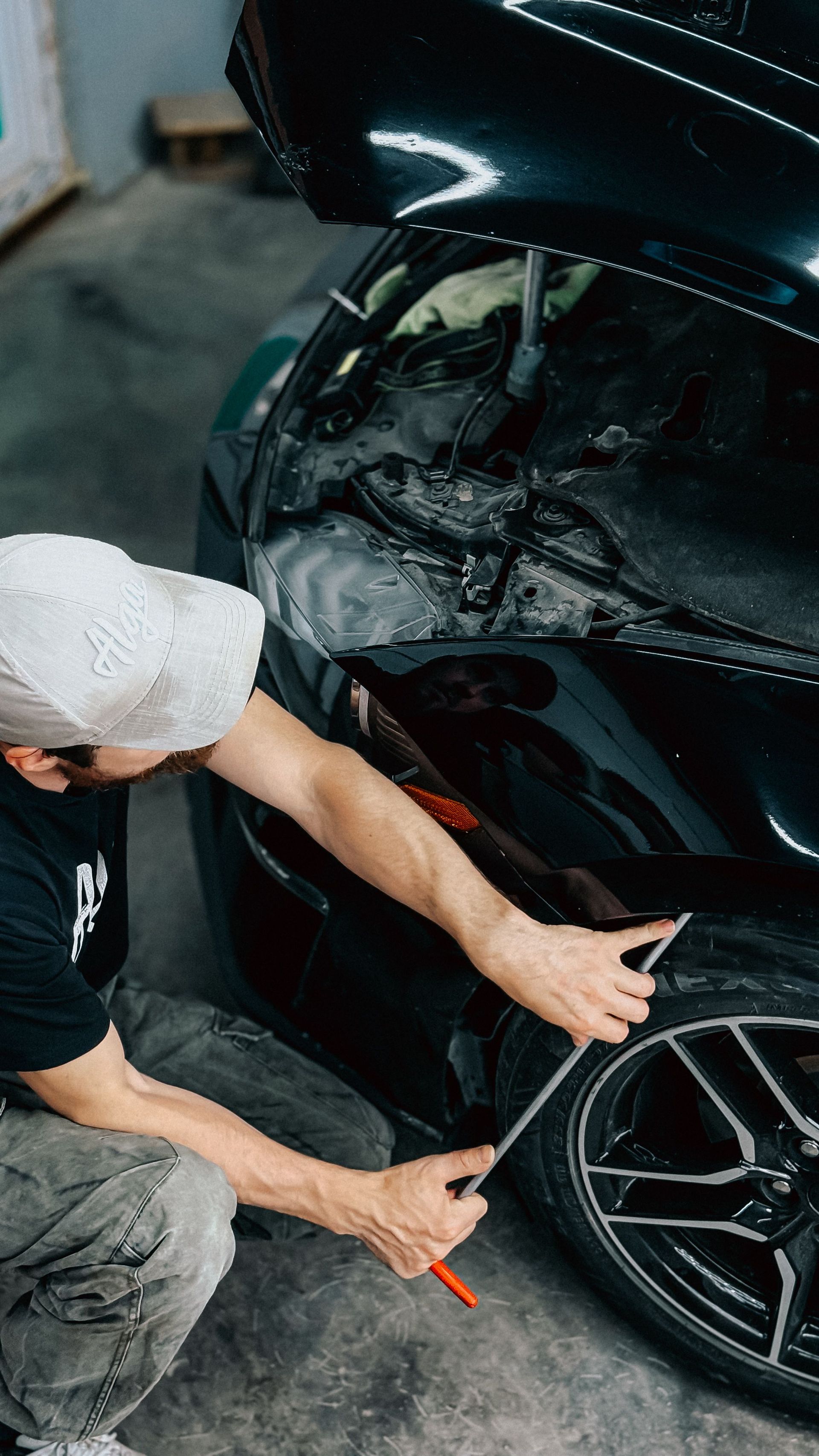
Once the car is approved for work, technicians take off the damaged panels, bumper cover, lights, and trim so they can see what the impact actually did. This is teardown, and it is where the real repair plan gets written.
Teardown almost always turns up something the first estimate could not show, such as bent brackets, cracked mounting tabs, or a sensor bracket knocked out of position. The shop documents these findings, updates the repair plan, and if an insurer is involved, sends a supplement request for the added work. That can take anywhere from a few hours to several days to come back, and work on the car often pauses while everyone waits.
This is also why a shop that promises a firm date before teardown is taking a gamble. The honest version sounds like this: here is our best estimate, here is what could change it, and we will call you if it does.
Tip:
Ask your shop to text or email photos of any hidden damage found at teardown. Seeing it yourself makes the extra time easier to understand and helps you approve additional work quickly, which keeps the schedule from stalling.
Stage Three: Parts Ordering, the Biggest Swing Factor
Once the shop knows exactly what is needed, parts get ordered. Of every stage in the process, this one moves the schedule more than any other, and it is the one the shop controls least.
Some parts arrive the same day from a local supplier, while others come from the manufacturer and can take a week or more, particularly for newer models, electric vehicles, and parts like headlamp assemblies and radar sensors. A backordered part can turn a one week repair into a three week one without anyone in the shop doing anything wrong.
Shops can soften the wait by ordering every known part right after teardown and checking more than one supplier, and bodywork on other panels can continue while a part is in transit. But final assembly cannot finish until that last box arrives.
Stage Four: Structural and Body Work
While parts are on the way, technicians start repairing what can be repaired. This is where the car's shape is brought back to factory specifications.
If the impact bent anything structural, the car goes on a frame rack or measuring system. Technicians pull the structure back to manufacturer dimensions, checking measurements repeatedly as they go.
This work cannot be rushed. A few millimeters off at the front of the car can mean a door that will not close right, a hood that sits crooked, or tires that wear unevenly. Repairs that include structural welding or replacement sections must follow manufacturer procedures, and those procedures set the pace.
Panel repair is the next layer. A small dent on a single door might take a few hours, while a crumpled quarter panel might take days. Paintless dent repair on intact paint can be done in hours, which is why a simple ding and a serious collision sit at opposite ends of the schedule.
Stage Five: Paint, Blending, and Cure
Paint is where patience pays off, and it is where drivers are often surprised by how many days go by after the dent is gone. A paint job is a series of steps, each one needing time to dry or flash before the next can go on.
The panel gets primed and sanded smooth. Then base coat color goes on in thin layers, with short wait times between coats so the solvents or water can escape. The clear coat follows, and the panel moves into a heated booth to cure. Paint manufacturers publish specific cure and dry times for each product, and a careful shop follows them instead of rushing the car out the door.
To get a color match that holds up in the Georgia sun, technicians often blend new paint into neighboring panels so the repair fades smoothly instead of ending at a hard edge. Blending adds panels and time, but it is the difference between a repair you can spot across a parking lot and one nobody notices.
Athens weather also plays a part. High humidity in the summer can affect how paint dries and how long some products need before they can be handled, which is one reason professional shops control the environment inside a paint booth instead of painting in open air. Freshly painted panels also keep hardening after they leave the booth, which is why a good shop will give you care instructions for the first few weeks.
Warning: Skipping cure time to get a car back faster is one of the most common ways a repair goes wrong. Paint that is handled or polished too early can shrink, dull, or show sand scratches later. If a timeline seems unrealistic for the amount of paint involved, ask how the shop handles cure time.
Stage Six: Reassembly, Calibration, and Quality Check
When the paint is ready, the car goes back together. Lights, trim, bumper covers, handles, moldings, and sensors all return to their positions. This stage is often where small problems show up, like a clip that cracked during removal or a bracket that needs one more adjustment to bring the gaps even.
Many newer vehicles carry cameras, radar, and parking sensors that often need to be scanned and calibrated after a repair that touches those areas. Calibration can add a day or more, particularly when a specialist has to be scheduled.
Finally comes the quality check. A technician looks over the car in good light, checks panel gaps, compares the paint match from several angles, tests lights and electronics, and often takes a short drive. It usually takes hours rather than days, but it is where a good repair becomes a finished one.
General Time Ranges by Damage Level
Keep in mind these are general ranges, pulled from what industry sources and shops commonly report, and your car may land outside them for good reasons.
Minor Cosmetic Repairs
Small dents, light scratches, or a single panel that needs paint can often be done in a few days. Paintless dent repair on an intact panel can sometimes be done the same day or the next.
Moderate Repairs
A bumper cover, a fender, or several panels that need paint and blending often take somewhere around one to two weeks, longer if a part is on order or a calibration is needed.
Larger Collision Repairs
Jobs with structural work, multiple replaced parts, or airbag related repairs commonly run into several weeks.
Major Repairs
Heavy damage, especially on newer or less common vehicles, can stretch to a month or more when parts are scarce.
None of these are promises. A fair shop will give you its own best estimate once it knows what your car needs.
What Speeds a Repair Up and What Slows It Down
A few things tend to push a schedule in the right direction. Parts that are in stock locally, damage that is easy to see and does not hide surprises, prompt approvals on any added work, a clear repair plan written up front, and a shop with open space in the paint booth all help. Drivers who answer calls and texts quickly also make a real difference, since many stalls come from waiting on a decision.
Backordered parts, hidden damage found at teardown, structural repairs that need specialized equipment, tricoat or custom colors, sensor calibration that needs a specialist, slow approvals, and busy seasons at the shop all stretch the timeline. After a big Northeast Georgia hailstorm, a shop may get a wave of cars at once, and everyone's schedule shifts.
How to Keep Your Repair Moving
You cannot control a supplier's shipping schedule, but there is plenty you can do to keep things from slowing down.
Get The Car In Early
The sooner the shop inspects the damage, the sooner parts can be ordered and work can start.
Answer Quickly
When the shop calls about added damage or a decision, a fast reply can save a day or more.
Ask For Updates
Ask for a check in, such as a text when the car moves from body work to paint. Knowing which stage your car is in makes the wait easier.
Sort Out A Rental Or Other Ride Early
Do not wait until the day your car goes in to think about how you will get to work or class. If you have rental coverage through your policy, ask your insurer how it works and how many days it covers so you are not caught off guard if the repair runs long. If the repair timeline grows, tell the insurer and the shop early so you can plan together.
Ask What Could Change The Timeline
A shop that can answer that clearly at drop off has thought through the repair.
Do Not Push For Shortcuts
he stages that take time, like curing paint, measuring structure, and calibrating sensors, are the ones that protect the quality and safety of the repair. A fast repair that has to be redone is the slowest one of all.
Frequently Asked Questions
How long does a typical bumper repair take?
A bumper cover needing minor repair and paint can often be done in a few days. Replacement covers, new brackets, and sensor work take longer, and your shop can give a range after removing the cover.
Why did my repair take longer than the first estimate said?
Most delays come from hidden damage found at teardown, backordered parts, or slow approvals. The first estimate reflects only what is visible from outside, and the true scope often appears once panels come off.
Do I need a rental car during my repair?
Often, especially when repairs run past a few days. Check how your policy handles rental coverage and ask the shop how long it expects to keep the car. Plan a ride early.
Will a newer car take longer to repair than an older one?
Often yes, though not always. Newer vehicles carry more sensors and cameras, so they may need harder to source parts and calibrations afterward. Older vehicles have their own challenges, like parts no longer being made.
What should I expect when I pick up my car?
Walk around it in good light with a technician, checking panel gaps, paint match, and lights. Ask about paint care for the first few weeks, and raise questions before you drive away.
Understanding Each Stage Makes the Repair Wait Easier
Collision repair takes as long as it does because every stage has a real job to do. The estimate sets the plan, teardown finds what the plan missed, parts arrive on their own schedule, body work restores the shape, and paint needs time to build and cure. Good communication can shorten some of those stages, but none of them can be rushed without costing quality. Knowing that turns an uncertain wait into a process you can follow from drop off to pick up.
At Oconee Auto Refinishing & Body Repair, we have spent 3 years repairing vehicles for drivers in Athens, GA, and nearby communities, and we know how much a clear explanation eases the stress of being without a car. Every vehicle brings its own surprises, from hidden damage to backordered parts, so we walk each owner through what we find as we find it. Honest updates and careful work protect both your schedule and your safety, and that gets you back on the road.